Paid Advertising
How to Build a High-Converting Paid Ads Funnel
V
By Viraj Perera2026-06-20
5 Min Read
The Era of Generic Advertising is Over
Many businesses launch ad campaigns on Meta or Google by simply boosting a post or running direct-to-product ads. While this might have worked years ago, rising ad costs and privacy changes mean you need a structured, multi-step funnel to convert clicks into customers.
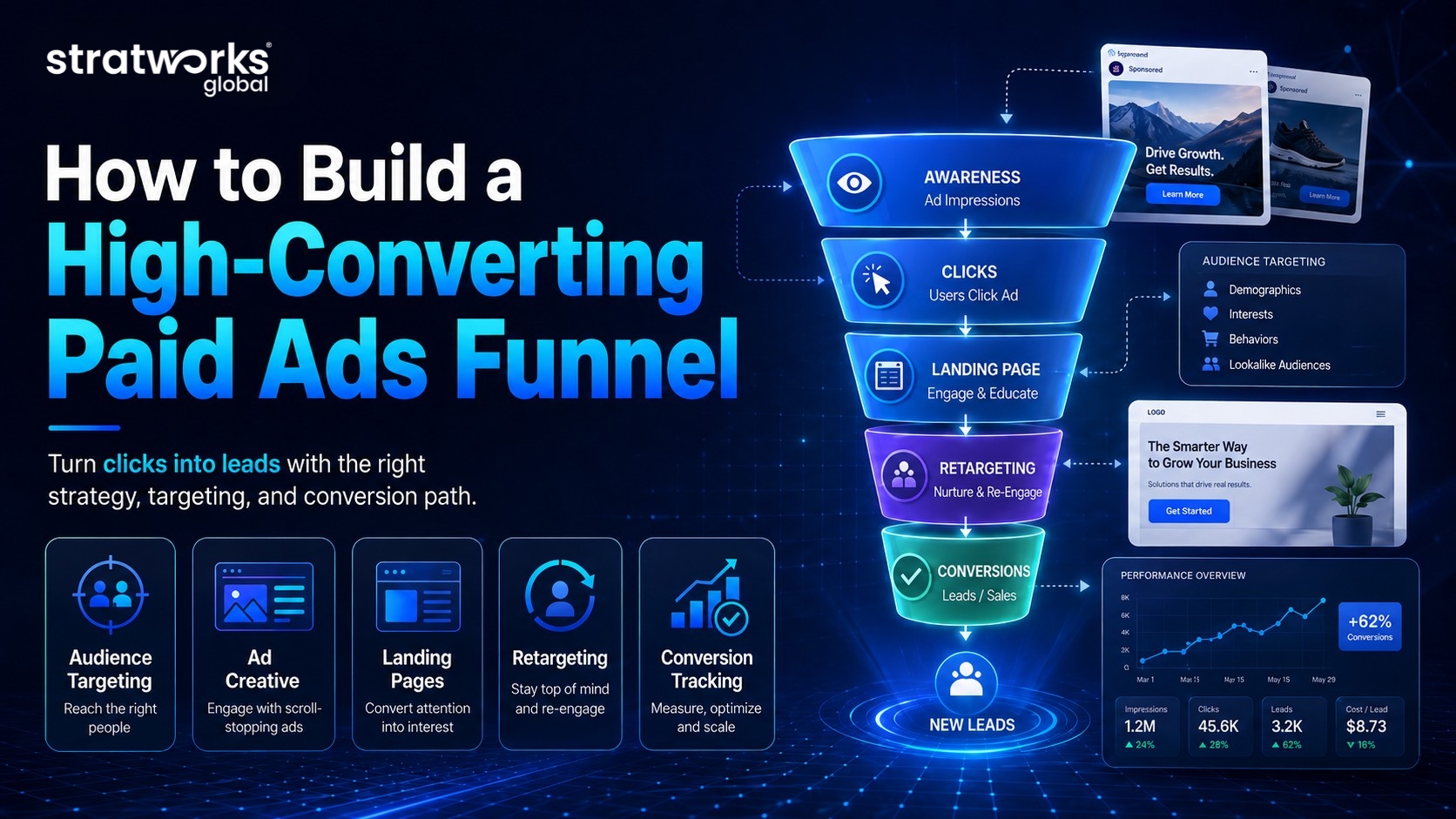
Step 1: The Hook and Awareness (Top of Funnel)
At the top of the funnel (TOFU), your goal is to capture attention. Use scroll-stopping video hooks or educational carousels. Don't sell immediately—instead, address a key pain point or desire your audience has. Focus on building retargeting lists of users who watched at least 50% of your video or visited your informational blog post.
Step 2: The Core Offer and Consideration (Middle of Funnel)
Once users are aware of your brand, introduce your core solution. This is where you run lead generation forms, free consultations, or product demos. Showcase customer testimonials, case studies, or trust badges to eliminate risk. Make sure your landing page is highly optimized, fast-loading, and has a single clear call-to-action.
Step 3: Retargeting and Conversion (Bottom of Funnel)
The bottom of the funnel (BOFU) targets those who visited your landing page or filled a lead form but didn't convert. Show them limited-time offers, detail your money-back guarantees, or run FAQ-based ads that address common objections. Setting up Meta's Conversions API (CAPI) alongside the standard browser pixel is crucial here to ensure accurate conversion tracking and better optimization.
Conclusion
Building a funnel takes time, but it guarantees that you aren't wasting money on cold traffic that never buys. Treat every stage of the customer journey with tailored copy and creatives, and you'll see a massive improvement in your acquisition costs.